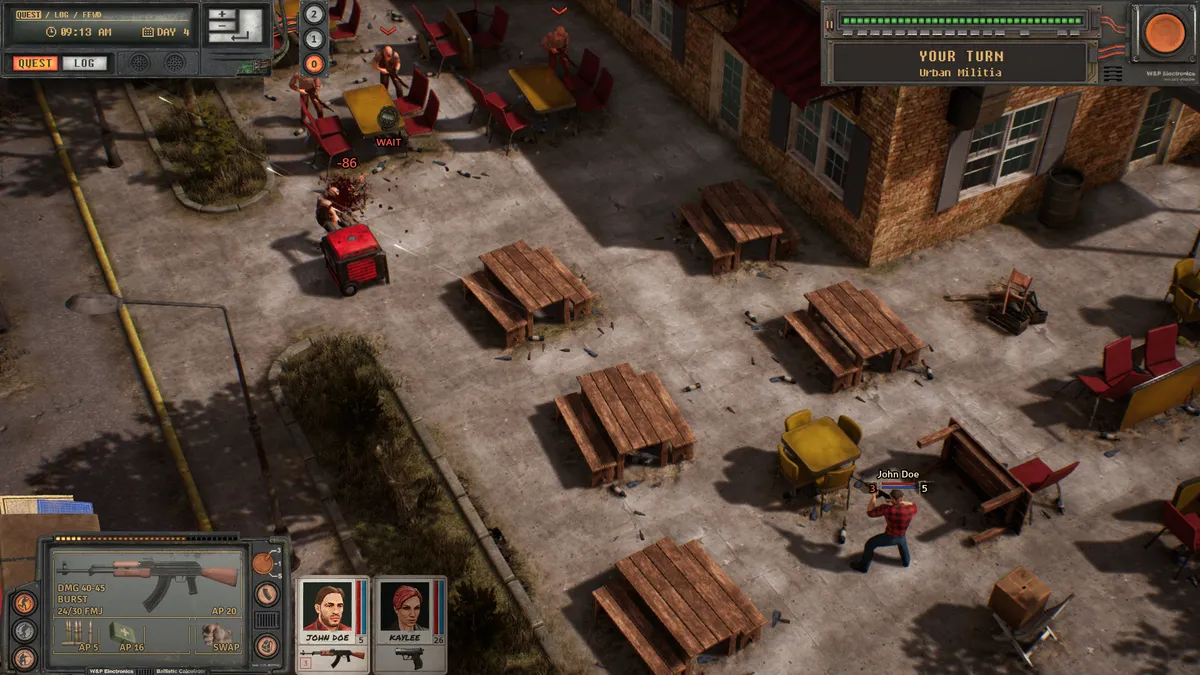
Weapons in Urban Strife are physical tools, not abstract dice. Because the game runs a real ballistic simulation, the class of gun you carry, the caliber you load and the cover in the way all change what a shot actually does. This Urban Strife weapons guide walks through the weapon classes, the ammunition, the attachments and the five crafting workshops that turn scavenged scrap into a working arsenal for your squad.
How ballistics shapes weapons
Urban Strife's combat is built on real ballistic simulation, so weapons matter as physical tools rather than abstract dice. Every bullet and shotgun pellet follows its own trajectory, penetration depends on caliber and the material it hits, and cover only protects you at the right thickness and angle. This page covers the weapon classes, ammunition, attachments and the crafting workshops that turn scrap into an arsenal.
The reason this matters for weapon choice in Urban Strife is that different guns exploit the simulation in different ways. A shotgun spreads pellets across a clustered horde; a high-caliber rifle punches through cover or lines up several enemies; a suppressed pistol kills quietly for a low action-point cost. Picking the right weapon in Urban Strife is really about picking the right physics for the situation in front of you, and the sections below break the Urban Strife arsenal down class by class.
- Bullets follow simulated trajectories instead of abstract hit rolls, so a shot can pass through walls or line up several enemies at once.
- Shotgun damage is counted pellet by pellet, which means firing into a crowd or a horde can hit multiple targets in one blast.
- Grenade explosions throw fragments that each travel their own path.
- Cover depends on material, thickness and angle: hiding behind a car engine block stops most calibers, while a thin fence does not.
- You can aim at specific body parts (head, arms, chest, legs) in single-fire mode; switching to burst fire limits you to center mass.
- Anyone standing in the line of fire can be hit, including your own survivors, so lanes and positioning matter.
Weapon classes
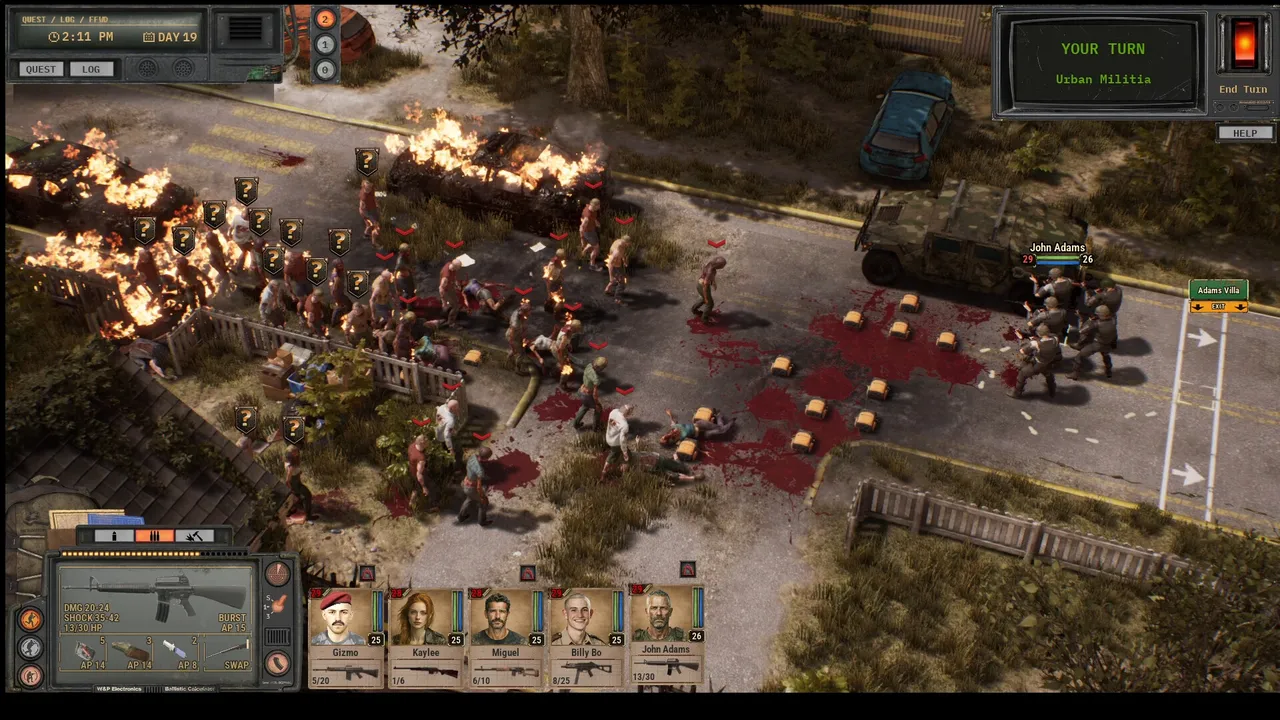
Urban Strife groups guns by class, caliber and ammunition rather than a fixed list of named real-world models. Each class fills a distinct tactical role in Urban Strife, so a balanced squad usually carries a mix rather than leaning on one type. The main weapon classes are:
| Class | Role |
|---|---|
| Handguns | Low action-point cost and available with suppressors for quiet kills; strong for stacking hits and stealth play. |
| Shotguns | Pellet-based damage that excels against clustered zombies at close range. |
| Assault rifles | Versatile automatics capable of burst fire for cumulative damage and multi-target penetration. |
| Hunting rifles | Accurate medium-to-long range single-shot weapons. |
| Sniper rifles | Long-range precision, including a .50 BMG anti-materiel rifle for the heaviest targets. |
| Crossbow | A silent ranged option effective at close to medium range, useful when you have no suppressor. |
| Melee | Everything from a baseball bat, frying pan and rolling pin to a crowbar, rifle butt and bare fists for when the ammo runs out. |
| Explosives | Homemade grenades and Molotov cocktails that pair with the game's fire-propagation system. |
Ammunition types
Because penetration in Urban Strife depends on the round and the material it hits, ammunition is a real tactical choice rather than a single resource. Hollow points shred soft targets while full metal jacket drills through cover, and several special rounds are craftable as you progress. The ammunition types in Urban Strife include:
| Ammo | Use |
|---|---|
| Hollow point (HP) | Expanding bullets for soft targets. |
| Full metal jacket (FMJ) | Better penetration against cover and armor. |
| Slug | Single heavy shotgun projectile for concentrated damage. |
| Buckshot | Multiple shotgun pellets that spread across close targets. |
| Crossbow bolts | Around three bolt types for the crossbow. |
| Dum-dum rounds | Craftable rounds meant to help stop the hordes. |
| Explosive bullets | Craftable rounds for extra destructive effect. |
Matching ammunition to the target is a habit worth building in Urban Strife: load buckshot or hollow points when you expect close, unarmored zombies, and switch to slugs or full metal jacket when you need to punch through armor or the cover a human enemy is hiding behind. Carrying a mix means you are never caught with the wrong round for the fight in front of you.
Attachments and mods
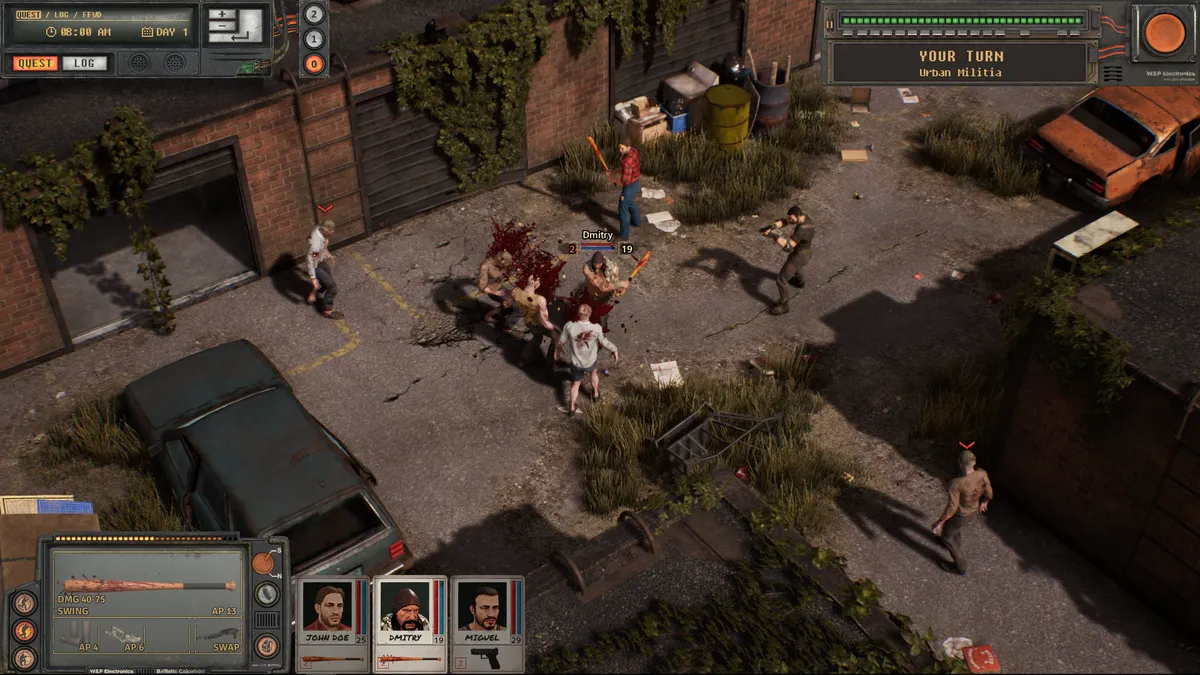
Attachments let you tailor a weapon in Urban Strife to your survivor and your tactics. You can loot or fabricate kits, drop an attachment into a backpack and fit it to a weapon that supports it, turning an ordinary gun into a specialised one.
- Weapon kits and attachments can be looted or fabricated; drop an attachment in your backpack and right-click a weapon to fit it if the weapon supports it.
- A military kit upgrades a rifle, while nails turn a bat or rolling pin into a far nastier melee weapon.
- High-capacity magazines and tactical weapon kits are among the parts you can produce.
- Optics and sights are built at the optics bench workshop.
The practical result is that no two squads in Urban Strife carry the same arsenal. A suppressor turns a pistol into a stealth tool, a high-capacity magazine keeps a rifle firing through a horde, and nails turn a bat into something far nastier. Building weapons to match how each survivor fights is a core part of the loadout puzzle in Urban Strife.
Crafting and workshops
Crafting is centralized under a single Industry tab in your inventory. You place orders while inside the shelter, spend stored materials plus special components, and the job completes over time. Five workshops cover the arsenal:
| Workshop | Produces |
|---|---|
| Bullet press | Presses recycled junk and gunpowder into batches of ammunition. |
| Explosives lab | Produces grenades, Molotovs and explosive ordnance. |
| Gunsmith | Builds and fits weapon attachments and modifications. |
| Armor tailor | Turns salvage such as a broken-down frying pan and cloth into body armor. |
| Optics bench | Fabricates optical parts and sights. |
Crafting is what keeps you armed through a long campaign of Urban Strife, since scavenged ammunition eventually runs dry. Reopening these workshops at Urban Shelter and feeding them scrap turns the base into a supply line for your squad, and some recipes only unlock as you progress. Investing in the arsenal at home is as important in Urban Strife as any weapon you find in the field.
Notable weapons
A few weapons stand out in Urban Strife, whether for raw power or for how neatly they exploit the simulation. Across a campaign of Urban Strife these are the pieces worth seeking out, looting or building at the shelter:
| Weapon | Class | Why it matters |
|---|---|---|
| .50 BMG anti-materiel rifle | Sniper | The heaviest sniper option, called out on the official site. |
| Suppressed pistol | Handgun | Quiet, low action-point cost, good for stealth and stacking hits. |
| Crossbow | Silent ranged | Silent close-to-medium range weapon with a few bolt types. |
| Nailed baseball bat | Melee | A common bat improved with nails. |
| Frying pan | Melee | An improvised weapon that can also be broken down for armor crafting. |
| Molotov cocktail | Explosive | Incendiary thrown weapon that works with fire propagation. |
| Homemade grenade | Explosive | Throws fragments that each follow their own trajectory. |
The game describes weapons by class, caliber and ammunition rather than a fixed list of named real-world models, and it does not publish exact damage or penetration numbers. Submachine guns and light machine guns were kept out of the default lineup during Early Access. Craftable ammunition and the bullet press were still expanding late in development, so some recipes unlock as you progress.