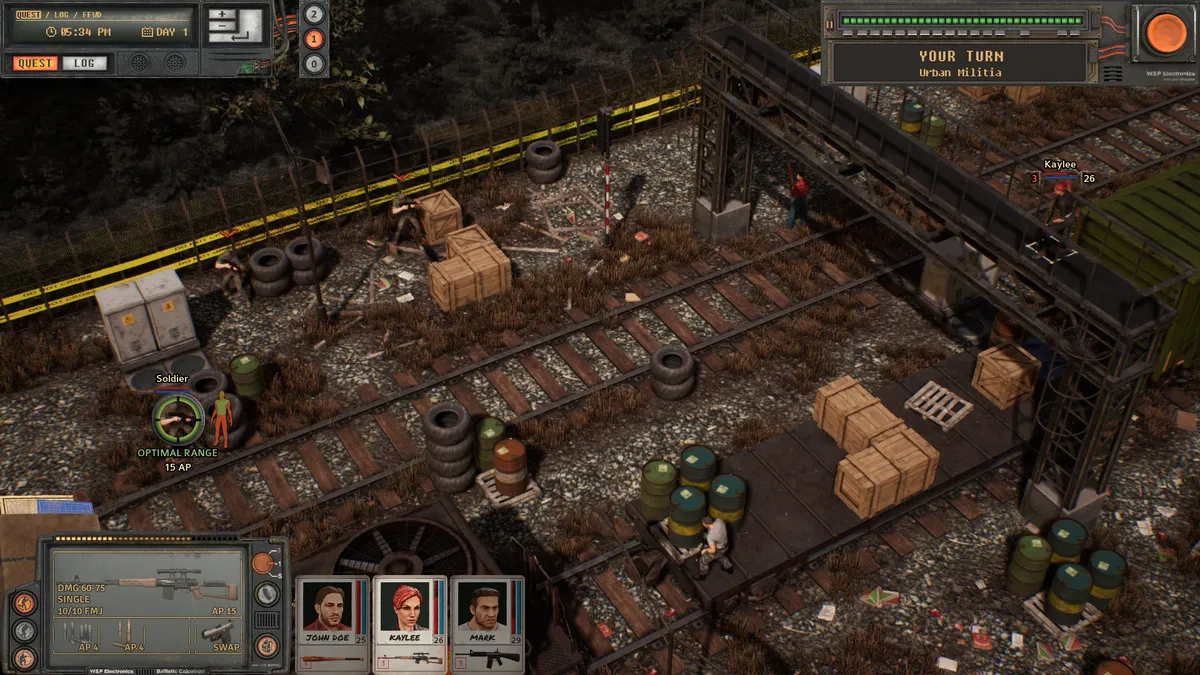
The threats in Urban Strife fall into two groups: the undead that grind you down through sheer numbers, and the living factions who may become enemies depending on the alliances you make. The campaign builds toward one climactic threat above all others, the Atlanta Horde that has chased you since the beginning. This page breaks down every enemy in Urban Strife — the zombie types and how to kill them, the bite-and-infection mechanic that can turn your own survivors, how hordes take their turns, the human factions you can make hostile, and the final siege you spend the whole campaign preparing for.
Two kinds of threat
The enemies of Urban Strife split cleanly into the undead and the living. The zombies of Urban Strife are rarely dangerous one at a time; they grind you down through numbers, and a single careless turn can let them swarm and infect a survivor. The living factions are the opposite: fewer in number but tactically capable, armed, and able to flank and take cover the way your own squad does.
Both halves demand different answers. Against the undead you lean on headshots, stealth, noise control and firing lanes; against hostile survivors you fight a proper tactical battle over cover and position. Understanding which threat you are facing at any moment is the first read to make in a fight in Urban Strife, because the wrong approach against either one gets a survivor killed. A single map can hold both kinds of threat at once — a roaming horde and an armed faction patrol — so staying aware of what is nearby, and how much noise you are making, is part of surviving every encounter.
Zombie types
Urban Strife confirms a handful of undead threats, and the difference between them changes how you shoot. Aim mostly matters here: ordinary zombies die to head hits, while tougher variants break that rule.
Shamblers Low individually, lethal in numbers
Shamblers are the common undead you meet everywhere in Urban. They are slow and individually weak, but they come in numbers and only really die to a head hit; strikes to any other body part deal very little damage. Their real danger is what happens when a survivor goes down. A downed character can be finished with a bite, and if that kills them, they rise as a zombie on the following turn and turn on your squad. Aim for the head to drop them in a single turn, and use stealth, suppressed weapons, noise and fire to thin them before they can swarm.
Armored zombies High
Armored zombies were wearing protective gear such as a bulletproof vest when they turned, and that armor carries over into undeath. The developers have been explicit that these cannot be killed with a single headshot, which breaks the reliable one-shot tactic that works on ordinary shamblers. They take longer to bring down, which drags out a fight and raises the risk of being bitten. Deal with them using repeated fire, higher-penetration ammunition or by breaking their protection first, and try not to let one tie up your squad while the rest of a horde closes in.
Infected allies High
Infection is a threat mechanic rather than a distinct monster. A survivor who is knocked down can be bitten, and a bite that kills them turns them into a zombie the next turn, adding your own firepower to the enemy. A survivor who is bitten but lives carries the infection for several days and must be treated by a doctor back at the shelter, since there is no instant cure. Handled badly, it forces you to put down a former squad member for good, because companions are permadeath. Keeping survivors on their feet and stabilizing them quickly is the best defense.
Horde AI
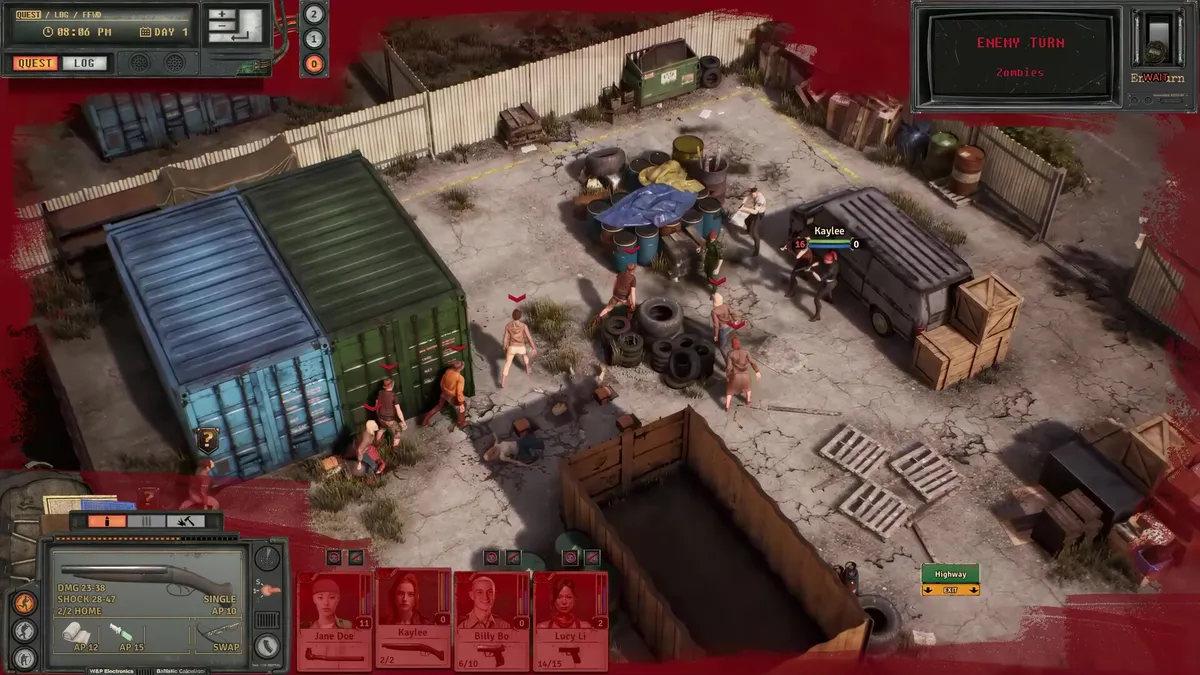
Zombie hordes are a core system, and Urban Strife handles them with a dedicated simultaneous phase: every undead in a horde moves together in the same turn, while each one still makes its own decisions based on what it sees and hears. That keeps large groups tense and readable instead of forcing you to sit through dozens of individual slow turns. Hordes roam the maps, and the undead react to noise and movement, so you can bait them with explosives, avoid them with careful positioning, or pick them off with suppressed weapons.
What this means at the table is that a horde in Urban Strife is fast and readable rather than a slog. Because the undead respond to noise and sight, you have real tools to manage them: throw an explosive to pull a group one way, move quietly to slip past, or sit on overwatch and let them walk into a killzone. Reading how a horde will react to sound and movement is the core skill for surviving the swarms of Urban Strife.
The Atlanta Horde and the siege
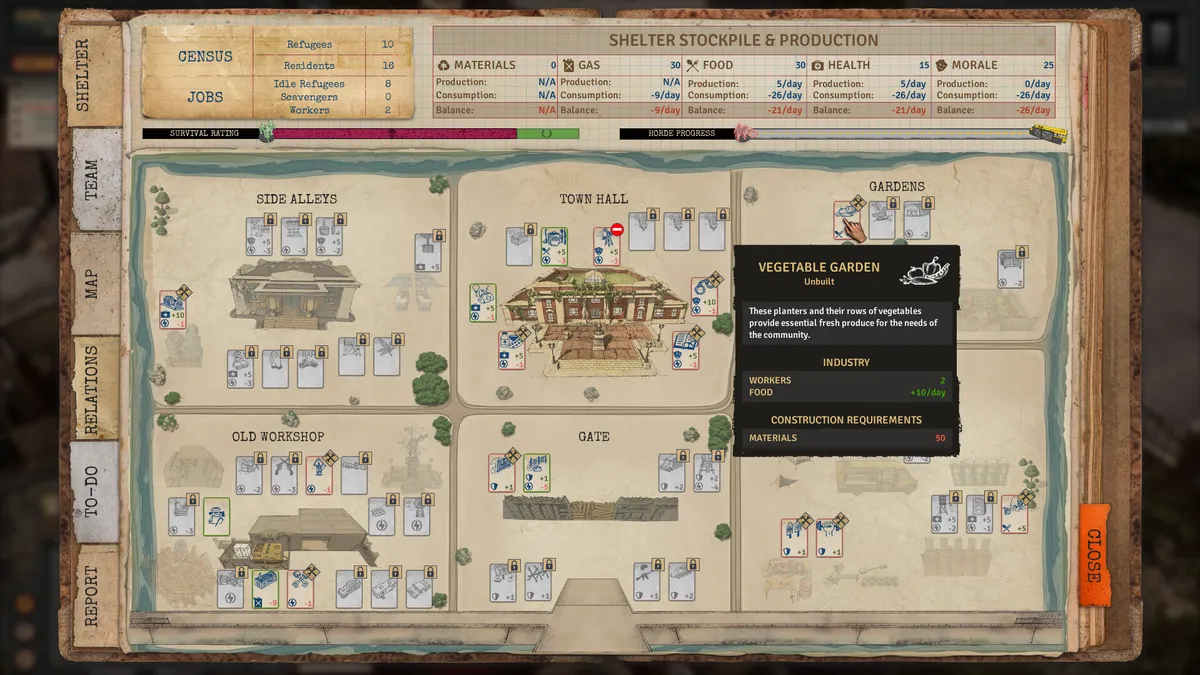
The campaign's finale is the siege of Urban Shelter by the Atlanta Horde, the massive wave of undead that has pursued you since you were evacuated from Atlanta. It arrives at the shelter itself, and the game gives you a radio warning roughly a day of in-game time before it hits so you can get everyone home and ready. The shelter overview gains a Defense Tracker that scores your readiness before the assault. How the siege goes depends on your fortifications, supplies, allies and upgrades, and on keeping those upgrades powered. Once the siege begins, scavenging stops, so you fight with whatever you built beforehand. Stockpile ammunition, repair your weapons and bring your strongest survivors, because the final defense is punishing.
Because the siege is the campaign's climax, this is where the enemies of Urban Strife and your own preparation meet. How well Urban Shelter holds comes down to the fortifications, supplies and allies you invested in across the whole game, all of which the Defense Tracker scores before the wave hits. Treat every earlier map and every quiet turn as preparation for this one fight, because there is no resupply once it begins.
Hostile survivors
The living are the other half of the threat. The three major factions hate one another, and committing to one turns the other two hostile, so at least two of the cult, the bikers and the army will end up as enemies on any given run. Beyond them, independent nomads, bandits and criminals raid across the county. The cult in particular fields capable fighters, including cloaked crossbowmen who flank and lay down crossing fire, so a raid on a faction is a genuine tactical battle rather than a walkover.
The takeaway is that in Urban Strife your enemies are partly of your own making. The faction you reject becomes a faction that shoots on sight, so at least two of the cult, the bikers and the army will oppose you on any run. Treat those human fights with the same care as a horde: use cover, flank their positions, and expect a real tactical battle rather than a walkover.
The game confirms ordinary and armored zombies plus the infection mechanic; it does not publish a full list of special variants or any enemy stat numbers.