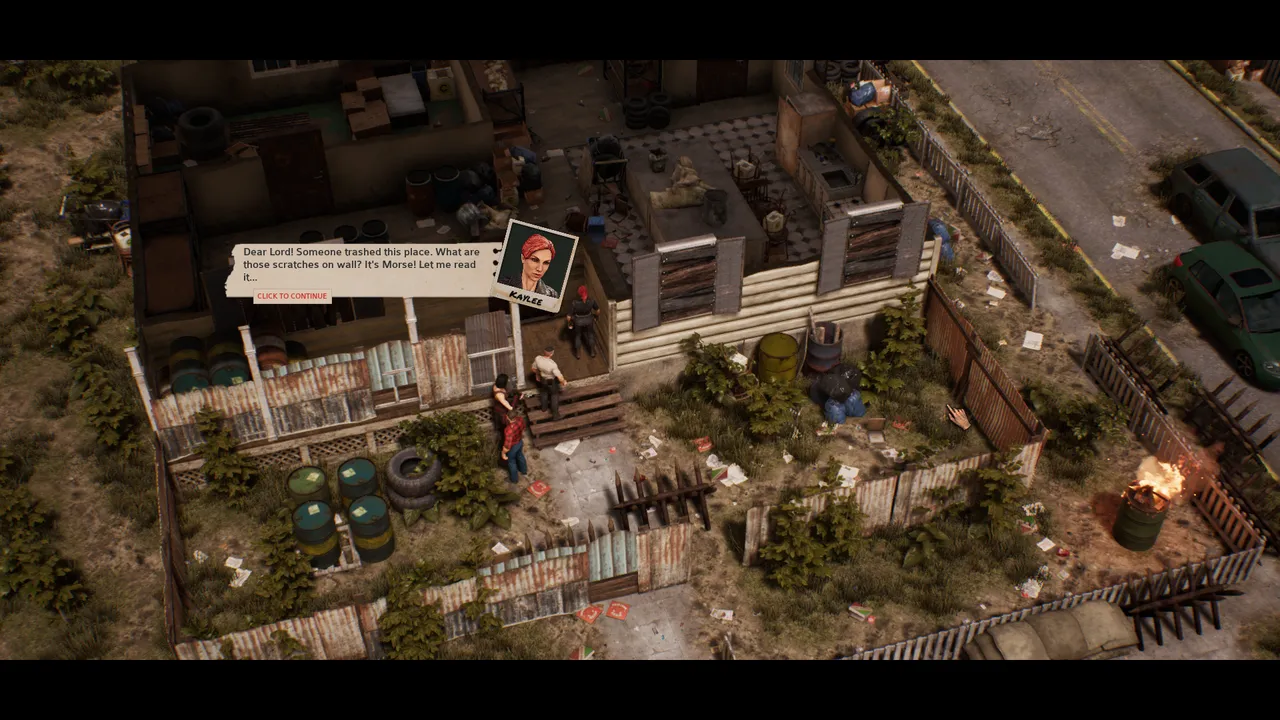
Character progression in Urban Strife works nothing like a typical RPG. There is no experience bar and no level-up screen. Instead, a survivor's attributes and specializations grow through use, so each one becomes whatever you actually have them do. Perks train by repeating an action, every recruit brings a native trait, and the 1.0 release added profession perks with no equip limit. Here is how it all fits together.
Progression without an XP bar
Urban Strife has no traditional experience bar or level-ups. Attributes and specializations grow through use, so a survivor becomes what you have them do. Six attributes define a character, specializations train into perks by repeating the matching action, and each recruit brings a native perk from their background.
The consequence is that you shape a survivor by how you deploy them. Play someone as a rooftop marksman and their long-range specialization climbs; have them patch up the squad and their item-handling improves. Because Urban Strife ties growth to action rather than to a shared pool of points, there is no wrong build to lock into early — a survivor simply drifts toward the role you keep giving them, and you can change direction over time. There is no penalty for experimenting, either: a survivor you first try as a medic can become a capable marksman later, simply by handing them a rifle and the high ground for a stretch of fights.
The six attributes
Six attributes define every survivor and set the ceilings for what they can do. They govern health, carry weight, action points, accuracy and how fast the rest of a character develops. The attributes are:
| Attribute | Abbr. | What it does |
|---|---|---|
| Endurance | END | Sets maximum health and, together with Strength, maximum stamina. Also used in some dialogue checks. |
| Strength | STR | Sets carry weight and melee damage, and feeds into maximum stamina. Raising it lets a survivor haul more loot. |
| Agility | AGI | Sets movement action points, interrupt chances and melee evasion, and decides who acts first when stealth breaks. |
| Dexterity | DEX | Sets the action-point cost of using items and melee accuracy. It grows through use, for example by using medical items. |
| Marksmanship | MRK | Sets ranged accuracy and gates the ranged perks; higher values are required before you can train headshot and sniper specializations. |
| Intelligence | INT | Controls how quickly experience and attributes grow, and unlocks some dialogue options. |
Intelligence is the quiet multiplier here: it controls how quickly everything else grows, so a smart survivor develops their skills faster than a slow one doing the same work. Marksmanship, meanwhile, gates the ranged perks — you need a minimum value before you can even begin training the headshot and sniper specializations.
Perk trees and specializations
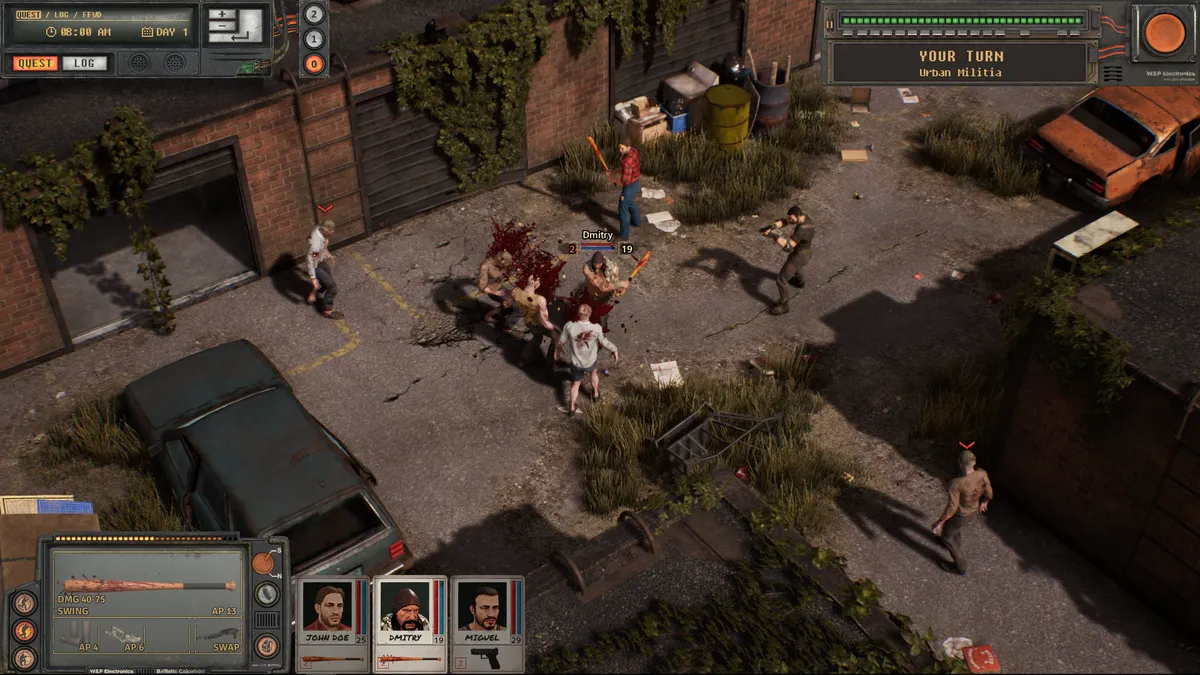
Specializations in Urban Strife are organised into a handful of trees, and you train a perk by repeatedly performing the matching action. Ranged perks come from firing the relevant weapon class, melee perks from close combat, and utility perks from support actions like carrying or healing. Perks can be trained up to three levels deep once you pass the attribute gate. The trees are:
- Ranged. Close range (handguns, shotguns), Medium range (rifles, crossbows), Long range (sniper rifles), Headshots, Burst fire, Higher ground. Trained by using the matching weapon class; headshot and sniper specializations require a minimum Marksmanship before you can start training them.
- Melee. Blade and pierce, Blunt, Hand-to-hand, Heavy melee. Melee draws on stamina for attacks and dodges; Dexterity governs accuracy and Strength governs damage.
- Utility. Encumbered carrying, Medical, Grenades, Backpack crafting, Stealth. Support specializations trained by performing the matching action, from carrying while overloaded to moving unseen.
- Special / native. Virus immunity, Barter, Drone pilot, Battle-hardened (fatigue resistance). Not trained but granted by a survivor's background. Each recruit keeps their native perk as a free bonus plus a unique defining trait.
The 1.0 profession perks
The 1.0 release reworked progression into profession-based perks arranged in three tiers, and removed the old limit that let a survivor equip only about one perk at a time. Now every perk you have unlocked can be active at once, and each recruit additionally keeps a free native perk plus a unique trait. You choose perks from the Notebook's Team page while at the shelter.
This was a meaningful change for Urban Strife. Under the old system a survivor could only run about one perk at a time, which forced constant trade-offs; now every perk you have unlocked stays active together, and each recruit additionally keeps a free native perk plus a unique defining trait. You select perks from the Notebook's Team page while at the shelter, so returning to Urban Shelter between missions is also when you tune each survivor's build.
Growing survivors by doing
Because there is no experience bar, an attribute or specialization only improves when it is tied to something a survivor actually does. Using medical items raises Dexterity; playing a survivor as a rooftop sniper builds their long-range specialization until its bonus unlocks. Intelligence governs how fast all of that growth happens, so a smart survivor levels their skills more quickly. Perks can be trained up to three levels deep once you pass the attribute gate and keep performing the action.
Practically, this means you should assign roles with intent. If you want a dedicated medic, hand that survivor the medical work so their Dexterity and healing perks climb; if you want a sniper, put them on the high ground every fight so their long-range tree matures. Native perks give each recruit a head start in one direction, so it is often easiest to lean into a survivor's background rather than fight it. Over a full campaign of Urban Strife, this use-based system quietly turns a band of ordinary refugees into a specialised militia.
The game does not publish exact per-level perk numbers, the full 1.0 profession list, or precise attribute thresholds; the figures here describe how the systems work rather than specific values.